The challenge
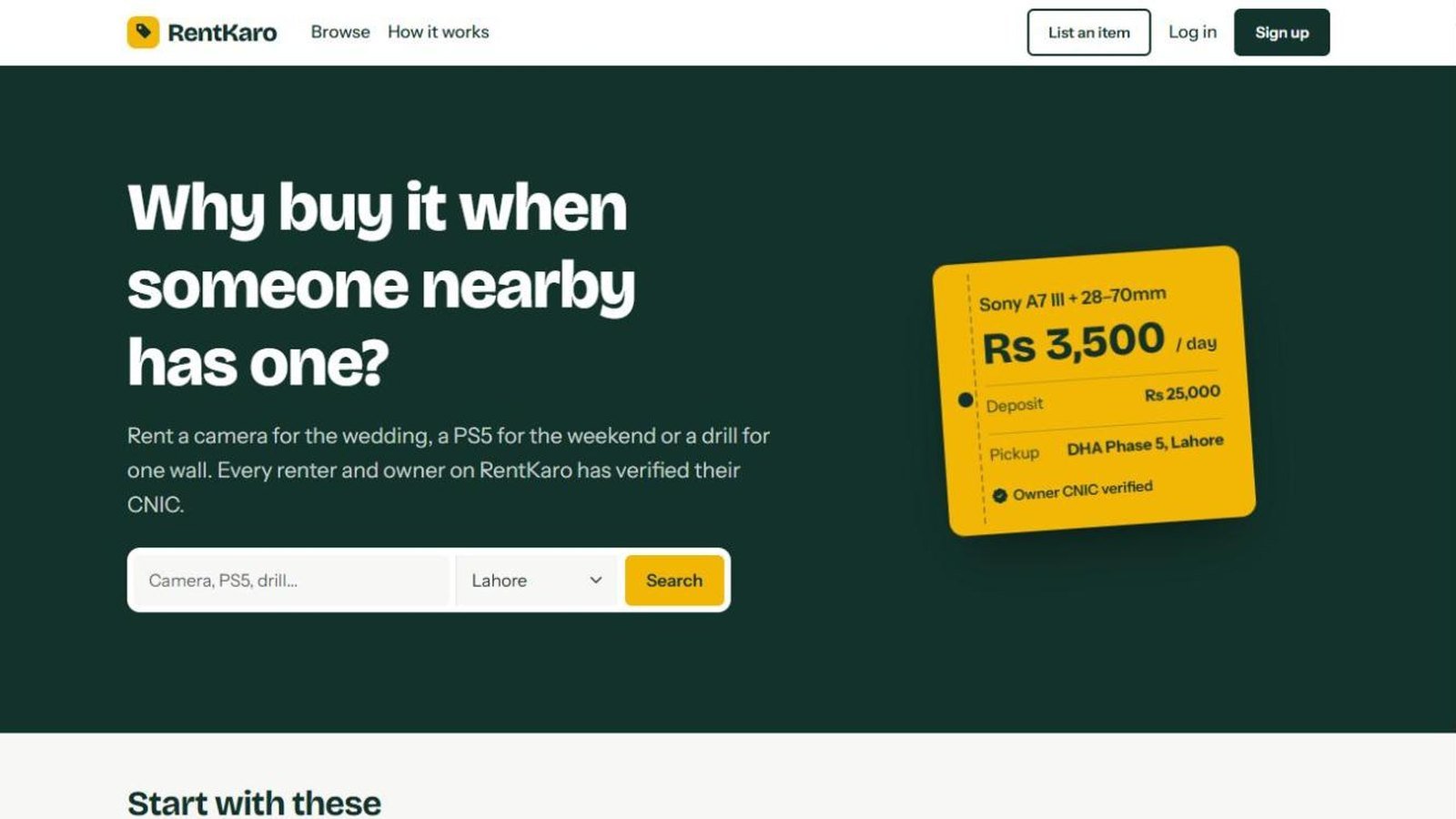
Lots of useful things sit unused most of the year: a camera bought for one wedding, a PlayStation played on weekends, a drill used for one wall. Renting from someone nearby makes sense, but in Pakistan it usually happens through Facebook groups and WhatsApp, where the hard questions have no good answer:
- Who is this person? Owners worry about handing a Rs 200,000 camera to a stranger.
- What if something goes wrong? Damage, late returns and missing parts turn into arguments with no record.
- How is money handled? Deposits are agreed verbally, and either side can walk away.
I wanted to build a marketplace that solves trust first, so both renters and owners feel safe — starting with Lahore and three categories: electronics, gaming and everyday tools.
What I did
I designed and built RentKaro end to end in Laravel, in three milestones.
1. Verified people
- Sign-up with a 6-digit email code.
- CNIC and selfie verification for every renter and owner, reviewed by an admin before they can rent or list.
2. Listings people can trust
- Owners set their own daily price and their own deposit, with photos and pickup area.
- Every listing is approved by an admin before it goes live.
- Browse by city and category, with a lowest-deposit sort, because the deposit is often what decides a rental.
3. A rental flow with a paper trail
- Booking with manual payment: the renter uploads a receipt and an admin confirms it. RentKaro holds the money until the rental ends.
- Pickup and return codes with photos taken together, so both sides agree on the item's condition.
- A 48-hour dispute window after return, then the owner's payout.
- In-app chat and reviews on both sides.
I kept pickup in person on purpose: meeting face to face and checking the item together builds more trust than a courier at this stage.
The result
- RentKaro is live at rentkaro.bytebench.org and has been tested end to end: sign-up, verification, listing, booking, payment, pickup, return and payout.
- The full trust layer — identity checks, held deposits, condition photos and disputes — is built into the product, not left to the users to work out.
- Next steps before a public launch are business registration, a legal review of the terms and privacy policy, and a dedicated domain.
Have a marketplace or platform idea? I build complete web apps like this — from sign-up and verification to payments and admin panels.